

Last Updated: October 26, 2026
Quick Summary
Fall shackets for women are worth it in 2026 because they work as a mid-layer when mornings are cold and afternoons are warm, fitting over a sweater, under a heavier coat, or on their own. Match the fabric weight to your climate first, then choose your style.
- Treat fabric weight as the most important spec, since a 6-oz cotton and 12-oz wool blend behave like different garments.
- Above 65°F, a lightweight cotton or polyester shacket worn open over a tee is plenty.
- Below 45°F, a shacket becomes a mid-layer and you need a true outer coat on top.
- Express's 2026 styling guidance recommends sizing down in an oversized shacket for a closer, fitted look.
- Wash brushed cotton and wool blends inside out on cold and air dry to slow pilling.
Table of Contents
- Why Fall Shackets for Women Earn Their Place in a 2026 Wardrobe
- How to Choose the Right Fabric and Weight
- Women's Plaid Shacket: Patterns That Stay in Style
- Finding the Fit: Oversized, Relaxed, Cropped, and Longline
- How to Style a Shacket for Fall: Layering That Actually Works
- Oversized Shacket Outfit Ideas for Every Day of the Week
- Is a Lightweight Fall Jacket for Women Enough for Your Climate?
- Care, Durability, and What to Check Before You Buy
- Frequently Asked Questions
Why Fall Shackets for Women Earn Their Place in a 2026 Wardrobe
A shacket is a hybrid shirt-jacket that works as a mid-layer when mornings are cold and afternoons are warm.
The appeal is practical, not decorative. A shacket fits over a sweater, under a heavier coat, and on its own when the temperature sits in that awkward middle zone. Instagram's 2026 shacket trend coverage frames the style around exactly this shirt-and-jacket function for transitional weather.
What most guides get wrong is treating a shacket as a trend item. Treat it as a layering tool and the buying decision gets much simpler.
If you are building a wardrobe around pieces like this, our guide on how to build a capsule wardrobe shows where a shacket fits alongside your existing staples.
How to Choose the Right Fabric and Weight
Fabric decides everything about how a shacket performs: warmth, drape, and how often you actually reach for it. A common mistake is buying the heaviest option available and then finding it too warm for anything but deep winter. Match the fabric to your climate first, then to your style.
Weight breaks down into three practical tiers:
- Lightweight cotton or polyester blends: best for mild fall days and indoor-to-outdoor transitions
- Flannel and brushed cotton: the middle ground, warm without bulk
- Wool and wool blends: the cold-weather end, best as a true outer layer
How We Selected and Evaluated These Shackets
Most 2026 roundups you will find are recycled from 2021-2023, and the freshest results are social posts rather than shopping guides. To avoid that trap, this guide was built around a stated method so you can judge the picks rather than take them on faith.
Flannel, Wool, and Wool-Blend Shackets for Colder Days
For genuinely cold mornings, wool and wool-blend shackets hold heat better than cotton while staying breathable indoors. Flannel sits just below them on the warmth scale and is the easier everyday choice.
Use this side-by-side comparison to choose between the main fabric families before you shop:
| Fabric | Typical Weight | Warmth | Bulk | Care | Best Use |
|---|---|---|---|---|---|
| Cotton flannel | 5-7 oz | Low-medium | Low | Machine wash cold, tumble low | Mild fall days, layering over tees |
| Brushed cotton | 7-9 oz | Medium | Medium | Machine wash cold, hang dry | Everyday fall wear |
| Wool blend | 10-14 oz | High | Medium-high | Hand wash or dry clean | Cold mornings, true outer layer |
| Quilted poly | 6-8 oz | Medium | Low | Machine wash cold | Mild weather, extra insulation without weight |
| Corduroy | 8-11 oz | Medium | Medium | Machine wash cold, inside out | Casual offices, evening plans |
| Denim | 10-12 oz | Medium | High | Machine wash cold, rare | Repeated wear, durability |
If you are layering for real winter, pair your shacket with pieces from our roundup of cozy sweaters for winter so the mid-layer and base layer work together rather than fighting for space.
Denim, Corduroy, and Quilted Styles for Mild Weather
Denim, corduroy, and quilted shackets suit mild fall weather and add texture that a plain flannel cannot. Quilted versions give a little extra insulation without weight.
Watch the trade-offs: quilted shells are usually polyester and can trap heat on warmer afternoons, corduroy piles can flatten at the elbows with heavy wear, and denim takes longer to break in but outlasts the others.
Women's Plaid Shacket: Patterns That Stay in Style
A women's plaid shacket is the safest pattern purchase you can make because plaid cycles in and out without ever fully leaving. Houndstooth and checked patterns follow close behind. People's 2026 lightweight shacket roundup highlights plaid, corduroy, and houndstooth as the styles shoppers are actually buying this season.
Scale matters more than color. Large-scale plaid reads casual and oversized; small-scale checks look more polished and pair easily with denim. Neutral ground colors, meaning gray, camel, and cream, outlast bright novelty plaids by several seasons.
Finding the Fit: Oversized, Relaxed, Cropped, and Longline
Fit is where most online shacket purchases go wrong. Most shackets are cut with an oversized silhouette, and Express's 2026 shacket styling guidance recommends sizing down if you want a closer, more fitted look.
Here is how the four main cuts behave:
Plaid Button-Up Long Sleeve Shacket →
| Cut | Best For | Watch Out For |
|---|---|---|
| Oversized | Layering over sweaters | Can swallow petite frames |
| Relaxed | Everyday wear, true to size | Less dramatic drape |
| Cropped | High-waisted jeans, skirts | Limited layering room |
| Longline | Leggings, cold-weather coverage | Can look bulky when belted |
Watch out: if you are between sizes, order your true size in a relaxed cut and size down in an oversized one. Guessing up in both is how shoppers end up with a shacket that never leaves the closet.
How to Style a Shacket for Fall: Layering That Actually Works
Knowing how to style a shacket for fall comes down to one rule: keep the layers underneath thin.
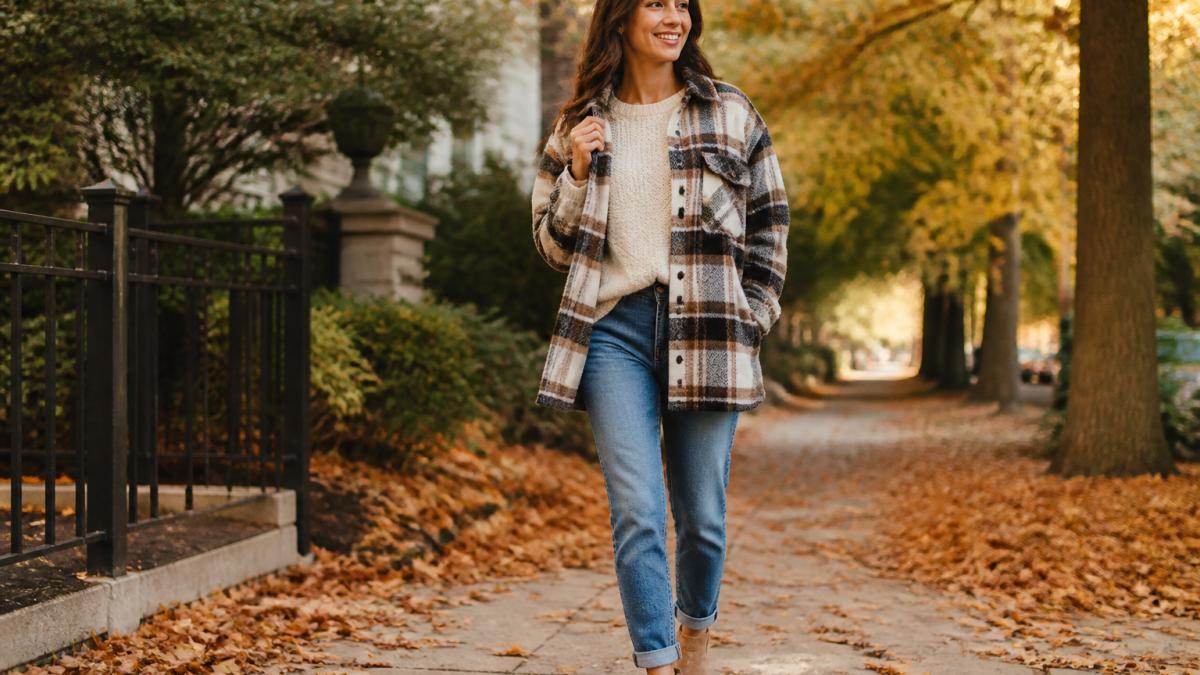
Start with a fitted base layer, add the shacket open, and finish with cuffed jeans or a midi skirt. To shop the exact look, browse our plaid button-up long sleeve shacket, which features a buttoned front, normal thickness, and a 100% polyester shell that machine washes cold.

Oversized Shacket Outfit Ideas for Every Day of the Week
Oversized shacket outfit ideas work best when you build around contrast: volume on top, something fitted below. Try an oversized plaid shacket with slim jeans and boots for weekdays, then swap to a skirt and clogs for weekend plans.
For occasions that need a coordinated family look, our fall family photo outfit ideas show how to pull the same palette across everyone. And if you are dressing for a casual game day, our game day outfit guide covers how a shacket fits into that rotation.
Is a Lightweight Fall Jacket for Women Enough for Your Climate?
A lightweight fall jacket for women is enough in mild climates where daytime temperatures stay moderate and evenings cool slightly. In colder regions, treat a lightweight shacket as a mid-layer under a proper coat, not as your outer layer. The honest test: if you need a scarf indoors, your shacket alone will not carry you outdoors.
Most guides stop there, but the useful answer is a temperature-and-layering framework rather than a yes-or-no. Use this as a starting point and adjust for wind, humidity, and how cold you personally run:
- Above 65°F: a lightweight cotton or polyester shacket worn open over a tee is plenty.
- 55-65°F: flannel or brushed cotton over a long-sleeve base layer; button it when the wind picks up.
- 45-55°F: wool or wool-blend shacket over a sweater, or a lightweight shacket under a heavier coat.
Fit Guidance Across Body Types and Size Ranges
Fit is where most online shacket purchases go wrong, and it is the area competitors cover least. Most shackets are cut with an oversized silhouette, and Express's 2026 shacket styling guidance recommends sizing down if you want a closer, more fitted look. The guidance below goes further by body type and height:
- Petite frames: an oversized shacket can swallow your proportions. Look for a cropped or hip-length cut, or size down one and check the sleeve length against the size chart.
- Tall frames: longline and relaxed cuts work well, but verify sleeve and body length in the garment measurements, a shacket that hits mid-hip on a model may sit at your waist.
- Curvy and plus-size shoppers: check that the shoulder seam sits at or slightly past your natural shoulder and that the button placket lies flat without pulling. Look for brands that publish garment measurements rather than only model sizing.
Measure your bust and compare it to the listed garment measurements rather than assuming your usual size will translate across brands. If you are between sizes, order your true size in a relaxed cut and size down in an oversized one. Guessing up in both is how shoppers end up with a shacket that never leaves the closet.
Care, Durability, and Material Trade-Offs
Check the care label before you fall in love with a pattern. Most polyester and cotton blends machine wash cold and tumble dry low, which is low-maintenance; wool needs more care and should be hand washed or dry cleaned.
Pilling is the most common durability complaint on brushed cotton and wool blends. Wash inside out on cold and air dry to slow it. Quilted styles can lose loft over repeated washing, and corduroy piles flatten at pressure points.
Care, Durability, and What to Check Before You Buy
Check the care label before you fall in love with a pattern. Most polyester and cotton blends machine wash cold and tumble dry low, which is low-maintenance; wool needs more care and should be hand washed or dry cleaned.
Sizing charts matter more than the size on the tag. Measure your bust and compare it to the listed garment measurements rather than assuming your usual size will translate across brands.
Frequently Asked Questions
Are shackets still cool in 2026?
Yes. Fall shackets for women remain a seasonal staple in 2026, with plaid, corduroy, denim, and quilted styles all appearing in fall editorials. The shirt-jacket shape works because it layers easily over sweaters and tees without the bulk of a coat. What changes year to year is the detail: cropped cuts, longer hemlines, and softer neutral plaids are getting more attention than the boxy fits of a few seasons ago. A well-cut shacket in a fabric you actually like will stay wearable well beyond one season.
Are shackets warm enough for fall?
It depends on the fabric and how you layer. A lightweight cotton or polyester shacket works well for mild fall days in the 55 to 70 degree range, especially over a long-sleeve tee. Flannel, wool, and wool-blend shackets hold more warmth and handle colder mornings, but none replace a real winter coat. For a lightweight fall jacket for women, check the thickness label and whether the body is lined. An unlined shacket layers better; a lined one adds warmth but takes up more room under a coat.
How do you choose the right shacket fit?
Start with the silhouette you actually reach for. Most shackets run oversized, so if you want a fitted look, size down one. Check the bust and length measurements against a jacket you already own rather than guessing from the size label. If you are between sizes, go with the larger one for layering room or the smaller one for a cleaner line. Petite shoppers may prefer cropped or hip-length cuts, while taller frames can carry longline styles without the hem swallowing them.
What should you wear under a shacket?
A fitted base layer keeps the outfit from looking bulky. Try a thin knit sweater, a ribbed long-sleeve tee, or a bodysuit under an oversized shacket. For dressier plans, a slip dress or a midi skirt with boots balances the casual top layer. Keep the under-layer close to the body and let the shacket do the volume. Cuffed jeans, clogs, and ankle boots round out the look, and a neutral palette makes the plaid or texture of the shacket the focal point.
A shacket only earns its place if it fits your climate, your layers, and your actual week. At Peace Valley Boutique, we carry seasonal pieces for the whole family, including a plaid button-up shacket cut for layering, plus curated fall and game day collections that take the guesswork out of coordinating. Browse the fall collection and subscribe for new arrivals before the season turns.
