

Last Updated: October 23, 2026
Quick Summary
The first rule of buying clothes for kids is to measure the child and read the size chart instead of trusting age labels, since a 4T from one brand can fit like a 3T from another. Write the numbers down and remeasure every season before you shop, because kids change fast.
- Measure chest, waist, hip, inseam and height with a soft tape measure in about five minutes.
- Size up for sweatshirts, jackets and leggings, but not for pajamas, which should fit snugly for safety.
- Soft cotton blends of 95% cotton or higher breathe, wash well and rarely irritate sensitive skin.
- Plan a base wardrobe of 5-6 everyday tops, 3-4 bottoms and 2 mid-layers, assuming a weekly wash.
- Run the pre-checkout checklist, including knowing the return and exchange policy before you order.
Table of Contents
- Start With Measurements, Not Age Labels
- Pick Fabrics That Survive Play and Sensitive Skin
- What Makes Durable Kids’ Clothes Worth the Price
- Choose Designs Kids Can Actually Dress Themselves In
- Build a Seasonal Wardrobe That Layers and Mixes
- Your Kids’ Clothes Shopping Checklist Before Checkout
- Conclusion
- Frequently Asked Questions
Start With Measurements, Not Age Labels
Age labels lie. A "4T" from one brand fits like a 3T from another, and the child in front of you does not care what the tag says. That is why the first rule of buying clothes for kids is simple: measure the child, then read the size chart.
At Peace Valley Boutique, we list full measurements for every kids' piece, from waist and hip to top length and sleeve. That data beats any number on a label.
How to Measure a Child at Home in Five Minutes
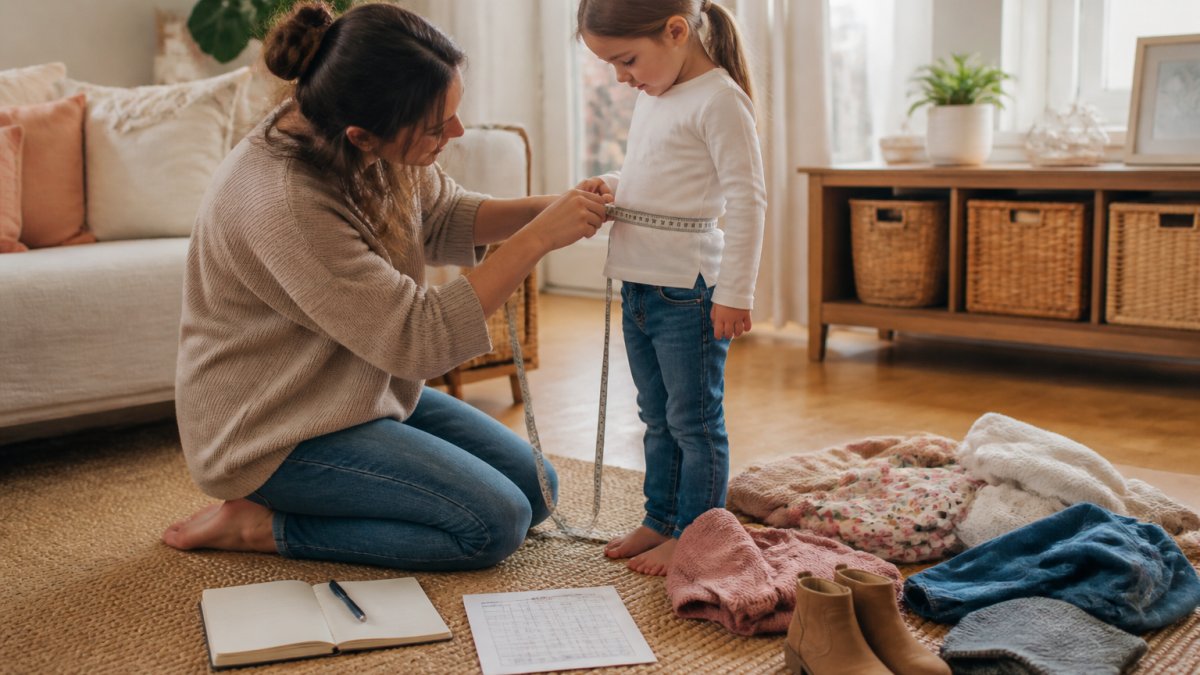
You need a soft tape measure and a kid who will stand still for roughly one minute. Here is the order that works:
- Chest or bust: Wrap the tape around the fullest part, under the arms. Keep it level.
- Waist: Find the natural crease when the child bends sideways. Measure there, not at the hips.
- Hip: Measure around the widest point of the seat.
- Inseam: Run the tape from crotch to ankle bone.
- Height: Stand the child against a wall, heels together, and mark the top of the head.
Write the numbers down. Kids change fast, so remeasure every season before you shop.
When to Size Up and When Not To
Sizing up is not always the answer. It depends on the garment and the season ahead.
Size up when:
- The item is a sweatshirt, jacket, or leggings meant to last through winter
- Your child sits between two sizes and the fabric has little stretch
- You are buying ahead for a growth spurt
Do not size up when:
- The item is pajamas, which should fit snugly for safety
- The garment is a special-occasion piece worn once or twice
- The next size up would swallow the shoulders or drag past the shoes
A common mistake is buying everything one size too big. Kids drown in oversized clothes, and cuffs get caught on playground equipment.
Pick Fabrics That Survive Play and Sensitive Skin
Fabric decides how a garment feels, how long it lasts, and how often your child actually reaches for it. Soft cotton blends win for most everyday wear. They breathe, wash well, and rarely irritate skin.
Skin sensitivity matters more than most guides admit. Kids with eczema or reactive skin do better in high-cotton content and smooth seams. Avoid rough tags and stiff synthetic blends against the skin.
Reading a Fabric Label Before You Buy
Check the fiber content first, then the care instructions. Here is what the numbers usually mean:
- 95% cotton or higher: soft, breathable, good for daily wear
- Cotton with a little spandex: stretchy, holds shape, great for leggings
- Polyester blends: durable and quick-drying, but less breathable
Our Children's Striped Bee Flower Appliqued Leggings run 96% cotton and 4% polyester, machine wash cold and tumble dry low. That is the kind of simple care routine that survives a busy week.

What Makes Durable Kids’ Clothes Worth the Price
Durable kids' clothes cost more up front and less over time. A shirt that survives forty washes beats three cheap ones that fade by wash ten. That is the math most parents miss at checkout, but the math only works if you know what to inspect and how to run the numbers.
The Construction Checks That Predict Longevity
Before you buy, run your hands over the garment and look for these specific build details. Each one maps to a known failure point in kids' clothing:
- Reinforced knees and seats. Playwear fails first at the knees on pants and the seat on leggings. Look for a double layer of fabric or a bar-tack stitch at those stress points. A single-layer cotton knee will blow out within a season of crawling and sliding.
- Double-stitched hems and side seams. A single row of stitching at the hem is the first thing to unravel. Turn the garment inside out and count the stitch rows at the hem and underarm.
- Bar tacks at pocket corners and fly openings. These short, dense stitches stop the fabric from tearing away from the seam. Missing bar tacks are a reliable sign of cost-cutting.
A Worked Cost-Per-Wear Example
Value is not the lowest price.
Say a $12 cotton tee gets worn twice a week for one school year, roughly 70 wears, before the neck stretches out. That is about 17 cents per wear.
A common pattern is that parents undercount wears because they forget laundry cycles. A shirt worn twice a week for a 36-week school year is 72 wears, not 20.
Safety Details That Affect Whether a Garment Lasts
Durability and safety overlap. Loose buttons, snaps, and decorative pieces are choking hazards for children under three, and a garment that sheds them is both unsafe and short-lived. Drawstrings at the neck are a strangulation risk on children's upper outerwear and are restricted by voluntary safety standards; hood and neck drawstrings should be absent or short and secured (Drawstrings in Children's Upper Outerwear).
Children's Striped Bee Flower Appliqued Leggings →
The Children's Strawberry Print Crew Neck Sweatshirt is a good example of a piece built for repeat wear. At 96% cotton, it holds up to weekly washing without losing shape, and the crew neck keeps its line instead of curling after the first month.
Choose Designs Kids Can Actually Dress Themselves In
The best kids' clothes are the ones your child puts on without help.
Practical features to look for:
- Wide neck openings on tees so heads pass through easily
- Elastic waistbands instead of fiddly buttons on pants
- Big zipper pulls that small hands can grip
Age-appropriate design matters too. Toddlers do best with pull-on styles. School-age kids can handle zippers and snaps, and they often want to pick their own outfits.
The Children's Cartoon Car & Rainbow Print Short Sleeve T-Shirt has a basic crew neck and a soft cotton blend, so it is easy on and easy off.

Build a Seasonal Wardrobe That Layers and Mixes
A smart kids' wardrobe is small, layered, and built to mix. Fewer pieces that all work together beat a closet full of one-off outfits that clash. The trick most guides skip is planning quantities by season and climate, then layering so one base wardrobe stretches across temperature swings.
How Many Pieces You Actually Need
Quantity planning prevents both shortages (the mid-week laundry panic) and overbuying (the drawer full of unworn clothes). A practical starting point for one child, adjusted for how often you do laundry:
| Category | Base quantity | Add for cold climate | Add for warm climate |
|---|---|---|---|
| Everyday tops | 5-6 | +2 long-sleeve | +2 short-sleeve |
| Bottoms (pants/leggings) | 3-4 | +2 lined or fleece | +2 shorts |
| Mid-layers (sweatshirts, cardigans) | 2 | +2 | 0-1 |
| Outerwear | 1 | +1 heavy coat | 1 light jacket |
| Sleepwear | 3-4 | +1 warm | +1 light |
| Socks/underwear | 7-10 | , | , |
These numbers assume a weekly wash. If you wash less often, add one to two pieces per category rather than doubling everything. The goal is enough to cover a laundry cycle plus one spare, not a full second wardrobe.
Layering That Handles Real Temperature Swings
Layering is how a small wardrobe covers a wide range of weather without buying a separate outfit for every forecast. Build in three tiers:
- Base layer: a breathable cotton or cotton-blend tee or long-sleeve. This is the piece against the skin, so prioritize softness and seam comfort for sensitive kids.
- Mid-layer: a sweatshirt, cardigan, or fleece that adds warmth and comes off easily when the day warms. Choose one with a wide neck or full front opening so a child can remove it alone.
- Outer layer: a jacket sized to fit over the mid-layer with room to move. Check that the sleeves do not drag past the hands and that the hem does not catch on playground equipment.
A common mistake is buying the outer layer to fit over a thin tee only. Size the jacket over the mid-layer you actually plan to use, or it will be too tight by the first cold snap.
Climate-Specific Adjustments
- Cold winters: prioritize a warm mid-layer and a properly sized insulated coat, plus lined pants or leggings for outdoor play. Add a hat and mittens to the plan; they are the pieces kids lose most, so buy two of the cheap ones.
- Mild or variable climates: lean on the mid-layer and a water-resistant shell rather than a heavy coat. A light jacket that blocks wind and drizzle gets worn far more often than a parka.
- Hot climates: fewer layers, more breathable cotton, and sun protection. Loose, light-colored long sleeves can be cooler than tank tops in direct sun and reduce sun exposure.
Safety in the Layer Stack
Layering introduces its own safety checks. Avoid neck drawstrings on hoodies and jackets; they are a strangulation hazard on children's upper outerwear and are restricted under voluntary safety standards. Check that hoods and toggles do not catch on play equipment.
Seasonal layering handles climate swings without a huge spend. In colder months, add a long-sleeve tee like our Children's Transportation Print Long Sleeve Crew Neck T-Shirt under a sweatshirt.

Your Kids’ Clothes Shopping Checklist Before Checkout
Run this checklist before you pay. It catches the mistakes that lead to returns and regret.
- I measured my child this season, not last year
- I checked the size chart, not just the age label
- The fabric is mostly cotton for daily wear
That last point on returns matters. A generous exchange policy turns a sizing gamble into a low-risk buy. Ask before you order, especially online.
Conclusion
Buying clothes for kids gets easier once you stop trusting age labels and start trusting measurements, fabric, and a short checklist. The goal is a small wardrobe that fits well, survives play, and lets your child dress without a fight.
At Peace Valley Boutique, we make that simpler with full measurement charts on every kids' piece, soft cotton-rich fabrics, and a curated selection for the whole family.
Frequently Asked Questions
Should I buy kids' clothes a size bigger?
Only sometimes. Sizing up works for outerwear, sweatshirts, and pajamas where extra length does not affect safety or fit. Skip it for leggings, underwear, and anything with a snug waistband, because loose fabric bunches and trips young children. A better rule: buy the current size for everyday wear and one size up only for layers. Check the garment's own measurements against your child's waist, hip, and length rather than assuming a size label means the same thing across brands.
What fabrics are best for children's clothing?
Cotton blends lead for everyday wear. A 95% cotton, 5% spandex mix gives stretch for movement, while 96% cotton, 4% polyester holds shape through repeated washing. Look for soft materials against the skin, especially for children with skin sensitivity. Avoid scratchy tags and heavy synthetic knits for playwear. Always check the care instructions: machine wash cold and tumble dry low keeps cotton from shrinking and extends how long the piece fits.
How can I tell if kids' clothes are durable before buying?
Check three things. First, the fabric composition: high cotton content with a small amount of polyester or spandex resists stretching out. Second, the seams and fasteners: reinforced stitching at knees and shoulders, and zippers that glide without catching. Third, the care instructions, since washable fabrics survive more cycles. Read the size chart measurements too, because a garment cut too close to the body wears out faster at the seams. A slightly roomier fit usually lasts longer.
Is it better to buy kids' clothes online or in a store?
Online shopping wins on selection and price comparison, but only if you measure first. Take your child's waist, hip, and top length at home, then match those numbers to the product's measurement table rather than the age label. Confirm the return and exchange policy before checkout so a wrong fit is not a loss. In-store shopping lets you feel fabric quality and check fasteners, which helps for sensory-sensitive kids. Many parents do both: browse online, then verify fit in person when possible.
